

Important Context to Minnesota
Might I.C.E. be turning the upper Midwest into a front line of the land back movement?
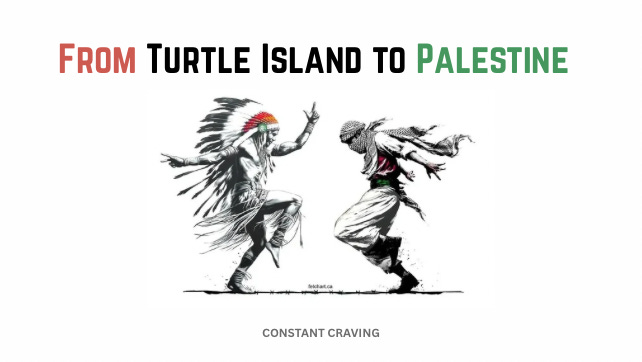
I grew up in the upper Midwest. That means I’m watching very closely what is happening in Chicago and the Twin Cities. It also means there is something I take for granted that people from other parts of the country (outside the Southwest) may not understand—tribal life.
In Wisconsin, Minnesota, and Michigan, Native nations are not an abstraction, a historical footnote, or a museum exhibit. They are present-tense political actors. They have land. They have courts. They have police. They have treaty rights that actually get exercised.
Neighbors grow up knowing which roads cut through reservation land, which lakes are treaty-protected, which gas stations are tribally run, which fishing seasons are governed by agreements older than the state itself. You don’t have to be “into” Native politics to be shaped by them. The structure of community life makes it unavoidable.
Heck, all the way back in college, as a student newspaper columnist, I wrote about tribal sovereignty. It is just part of the civic landscape.
That’s not true everywhere in the U.S. Outside the Southwest, many Americans rarely encounter sovereign Indigenous nations functioning in real time. In the upper Midwest, it is part of the fabric of society.
Why there are so many tribes there
I didn’t actually know much of the history behind this until I started writing this piece, so here’s a brief and incomplete summary of what I learned.
Wisconsin, Minnesota, and Michigan are home primarily to Anishinaabe peoples—Ojibwe, Odawa, and Potawatomi—alongside Dakota/Lakota in Minnesota and Ho-Chunk in Wisconsin. These nations did not vanish. They were displaced, contained, negotiated with, and continue to fight for their very survival under constant threat.
1. Treaties, not “defeat.”
Unlike parts of the South or Northeast, where removal was more total, many tribes in the upper Midwest entered into treaties in the 19th century that explicitly reserved rights: hunting, fishing, harvesting, governance. These treaties were not gifts from the U.S. government. They were concessions wrested under pressure, often after military conflict, often under duress. They were written down, ratified, and never legally extinguished.
2. Geography and economy.
The fur trade, the Great Lakes, and inland waterways made Native nations indispensable longer than in other regions. The U.S. needed cooperation in the upper Midwest. That created leverage, and tribes used it.
When states like Wisconsin, Minnesota, and Michigan formed, they did so on top of existing sovereign nations that had not ceded everything.
How tribal governance actually works (the basics)
Here’s the short version:
Tribes are sovereign nations, recognized by the federal government.
They have their own constitutions, councils, courts, and law enforcement.
Tribal law applies on tribal land, sometimes concurrently with federal law, rarely with state law unless explicitly agreed.
Treaty rights (especially around land use and water) often supersedes state law. This has been repeatedly affirmed by the Supreme Court, even when states hate it.
States cannot simply override tribal authority because they feel like it.
This is why conflicts over fishing rights, pipelines, mining, and policing in the upper Midwest never fully “go away.” The law is not on the state’s side as often as people assume.
Upper Midwest tribes have a long history of resistance including court cases that take decades and end in landmark rulings, environmental protection grounded in treaty law, armed standoffs over treaty enforcement, quiet refusal to comply with unjust state mandates, relentless insistence that treaties mean what they say
Wild rice protection in Minnesota. Anti-mining resistance in northern Wisconsin. Water defense across the Great Lakes. This is living governance.
What the Land Back movement is (and is not)
The Land Back movement is a political demand rooted in law, history, and survival.
Land Back is:
The return of land to Indigenous stewardship and jurisdiction
The honoring of treaties already on the books
The restoration of decision-making power over water, forests, and sacred sites
A framework for ecological survival grounded in long-term relationship, not extraction
Land Back is not:
Kicking random people out of their homes
A symbolic apology campaign
A lifestyle brand or hashtag
A call for chaos or lawlessness
In my view, Land Back is one of the only ethical and sustainable alternatives to the expanding carceral and border regime represented by ICE. It decentralizes power. It places authority in place-based governance. It prioritizes care of land and people over surveillance and punishment.
When responsibility is organized around relationship to place and community rather than abstract citizenship and enforcement, the need for expansive policing and border control diminishes rather than intensifies. It offers a model older than the nation-state and more upright than liberal reform.
If we’re serious about resisting mass detention, forced removal, and the steady slide of authoritarian enforcement, then supporting Indigenous sovereignty is the way (in my view).
Communitarianism, liberalism, and why this matters now
This is where this connects directly to what I wrote in Liberalism Is the Near Enemy of Buddhism.
Liberalism, for all its talk of rights and tolerance, is structurally individualist. It abstracts people from place. It treats land as property, community as voluntary association, and responsibility as optional. Tribal governance does the opposite.
It is communitarian in the deepest sense: rights emerge from belonging, not preference. Law is inseparable from land. Responsibility is not chosen; it is inherited and maintained. The question is not “What am I free to do?” but “What am I accountable for?”
This is why liberalism consistently collapses in moments of crisis and turns toward enforcement, policing, and borders. It has no account of shared obligation. When things get hard, it reaches for ICE.
Communitarian systems (especially Indigenous ones)already know how to live without that fantasy.
In addition to this creator @BrownGirlPride, whose work helps translate Indigenous history, humor, and political clarity in a way that reaches people, other Indigenous leaders I follow and learn from include:
The Sioux Chef by Sean Sherman, whose food work makes sovereignty tangible and local
Rebecca Nagle, whose perspective on history and politics contextualizes what’s happening in this country and in this world right now with clarity and insight
@zhaabowekwe (Tara Houska), who consistently names the legal and moral failures of liberal environmentalism;
NDN Collective, which models what organized, Indigenous-led communitarian power looks like in real time;
@autumn.peltier, whose water protection work has mobilized an entire generation; and
@matika, whose visual storytelling quietly dismantles the myth that Indigenous life belongs to the past.
Buddhism + witchcraft, and why this is the same fight
When I talk about Buddhism + witchcraft, I’m not just talking about spiritual beliefs and abstracted practice. I’m talking about ethics and accountability.
Buddhism, at its core, is a rejection of domination rooted in greed, hatred, and delusion. It asks us to organize life around interdependence, restraint, and care.
Witchcraft (understood historically) is a non-patriarchal, kinship-centered, land-based system. It locates power in relationship rather than hierarchy. It resists empire by refusing abstraction.
Land Back sits exactly at that intersection.
It is place-based, not universalizing.
It is relational, not extractive.
It honors ancestral responsibility over endless growth.
It centers care and continuity, not punishment and control.
For those of us practicing anything resembling Buddhism + witchcraft (I continue to encourage you to explore the depths of traditions that speak to you), aligning with Land Back isn’t aesthetic solidarity. It’s coherence.
European-descended people like myself from the upper Midwest have a lot of repair to do with our local tribes. But my hope, watching what is happening in Minnesota, is that we also understand the logic of tribal law intuitively because we grew up seeing what sovereignty looks like, and how hard we’ll have to fight for it.
The invitation now is to stop treating their survival, and the wisdom it carries, as exceptional, and start treating it as the path forward.
In spiritual solidarity,
🧿Constant Craving ✨
Resources
“Land Back.” Wikipedia: https://en.wikipedia.org/wiki/Land_Back
“Minnesota v. Mille Lacs Band of Chippewa Indians.” Wikipedia: https://en.wikipedia.org/wiki/Minnesota_v._Mille_Lacs_Band_of_Chippewa_Indians
“Wisconsin Walleye War.” Wikipedia: https://en.wikipedia.org/wiki/Wisconsin_Walleye_War
Minnesota Historical Society. “Treaties in Minnesota Ojibwe History”: https://www.mnhs.org/millelacs/learn/treaties
Wisconsin Department of Natural Resources. “Treaty Rights on Ceded Territory”: https://dnr.wisconsin.gov/topic/Fishing/ceded
Great Lakes Indian Fish & Wildlife Commission. “Treaty Rights and Tribal Resource Management”: https://glifwc.org/exercising-treaty-rights
Important to note in the middle of that first clip the comment about Trump's favorite president is Andrew Jackson. It is HIGHLY RELEVANT to this discussion, considering his Indian Removal Act. Too much to include in a comment, but you might consider an edit to the text ;-)
Kristi Noem and the entire regime absolutely intends to attack Native Sovereignty. That has always been a significant agenda going back decades leading up to this point. They have stated very openly they intend to "finish the job".